EN:
The history of the Jewish community in Merkinė spans several centuries. Documents from the 16th century already mention Jews living in the town, but the exact date when a permanent community was established is unclear. Sources from the 17th century attest to an organized Jewish community. Over time, the Jews of Merkinė became an important part of the town: they engaged in trade and crafts, owned mills and workshops, and their homes and shops were concentrated around the market square. In 1765, 444 Jews lived in Merkinė; by 1847, that number had grown to 1,565.
Community life was rich and diverse. Merkinė had three Jewish houses of prayer, religious and secular schools, and charitable societies. During the interwar period, children attended a Hebrew-language kindergarten, and the library held about 3,000 books in Hebrew and Yiddish. Young people joined social and sports organizations, and a “Maccabi” music group was active. Jews also participated in the town’s broader community life: many community members served as volunteer firefighters, and three participants in the Lithuanian independence struggles of Jewish descent were awarded Independence Medals in 1936.
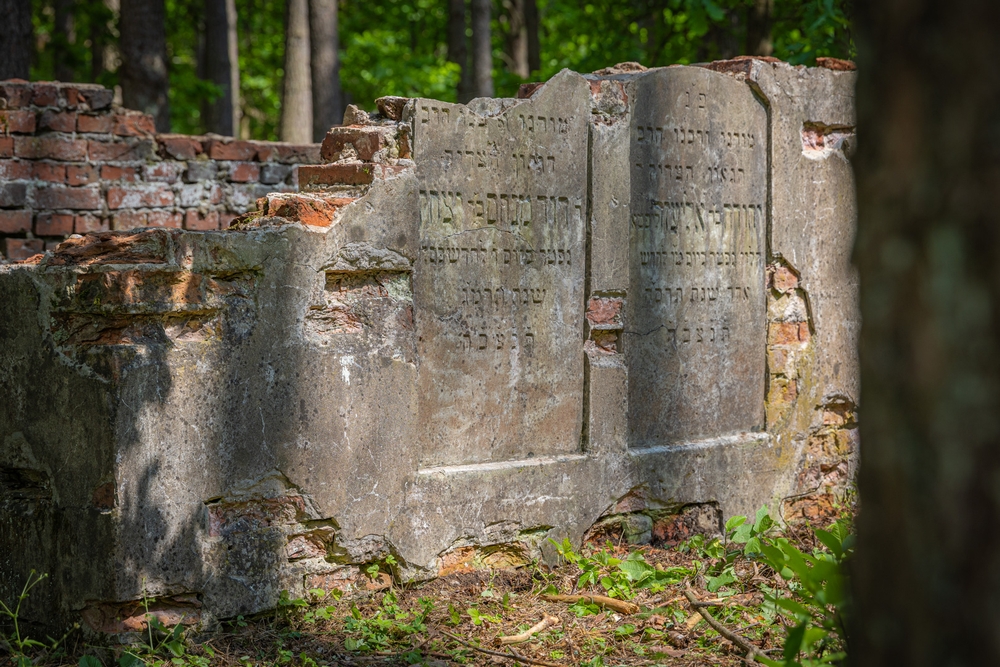
The old Jewish cemetery in Merkinė was most likely established in the 17th century or early 18th century and was in use until 1941. It is located on a hill beyond the Stangė Stream. A monument was erected there in memory of the Jewish soldiers who fell in the struggles for Lithuanian independence. The cemetery was fenced in, as evidenced by the remaining fragments of two fences. Remnants of stone walls are visible along the western and southern edges of the cemetery. The better-preserved sections are those of the newer fence. This fence was intended to enclose and slightly expand the cemetery. In the western section, it is 2–3 meters away from the old wall, runs south of the road, and extends the cemetery grounds by about 25 meters.
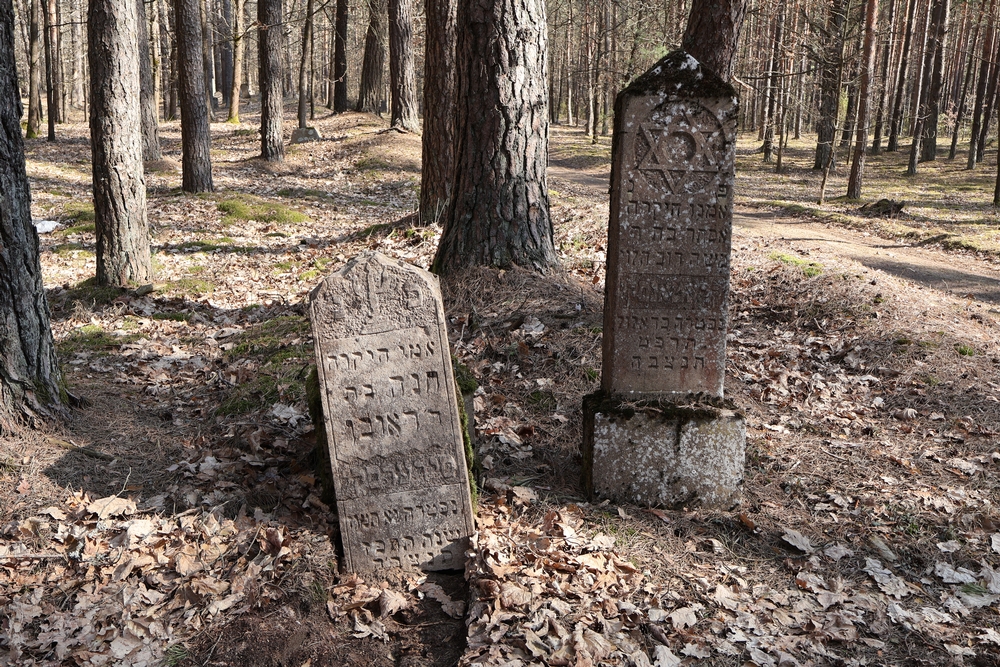
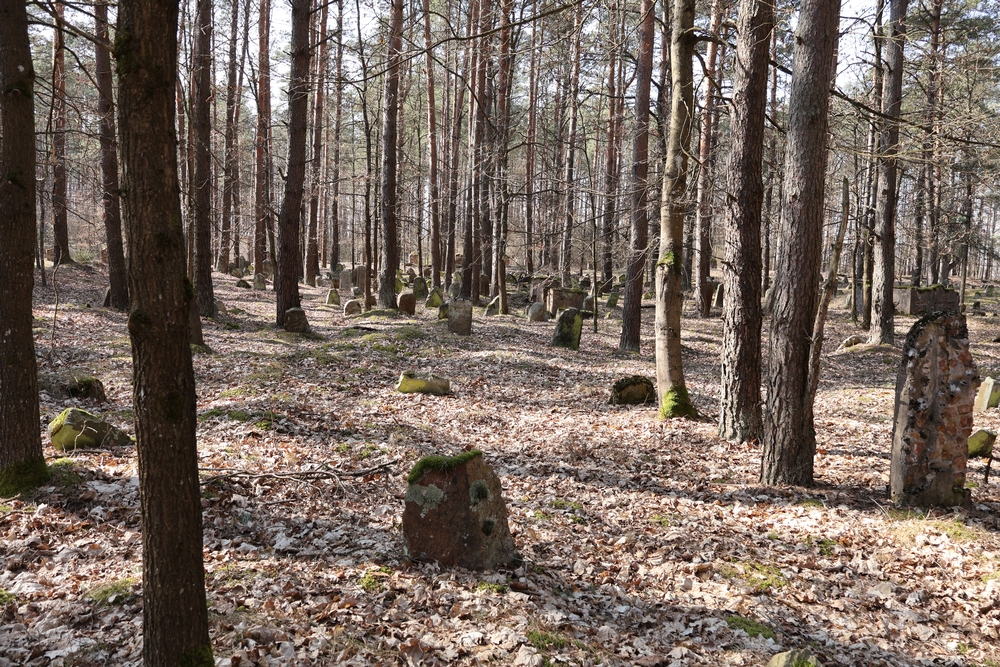
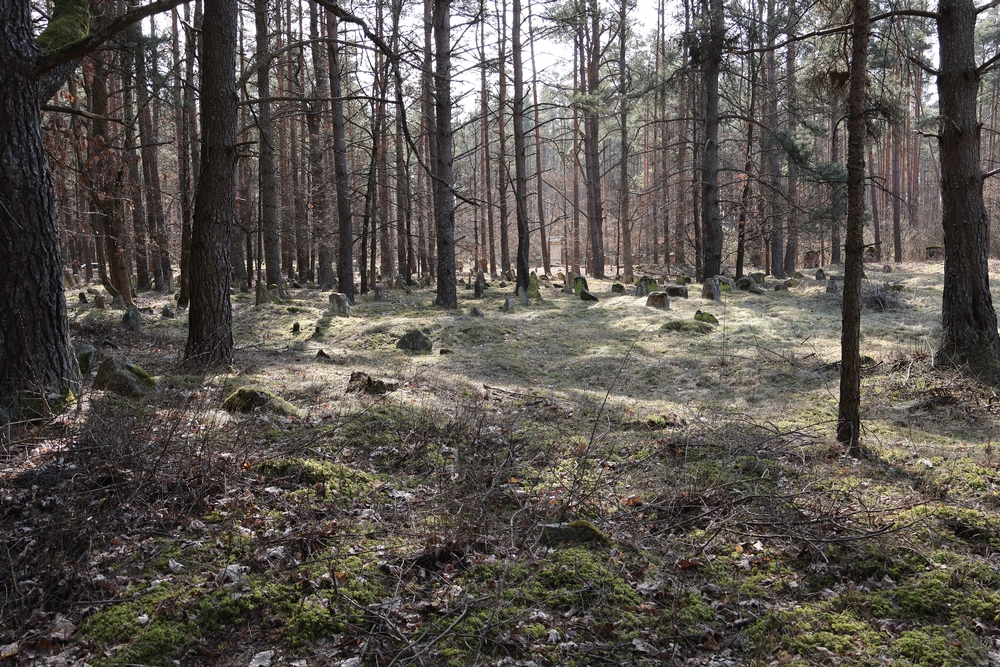
There are more than 1,500 surviving gravestones, but this does not represent the total number of people buried here.
In 2025 and 2026, the cemetery was documented in collaboration with soldiers from Germany’s “Panzerbrigade 45 Litauen.”
The documentation efforts were supported by the Goodwill Foundation and the Embassy of the Federal Republic of Germany in Vilnius.
LT:
Merkinės žydų istorija siekia kelis šimtmečius. XVI a. dokumentuose jau minimi miestelyje buvę žydai, tačiau tikslus nuolatinės bendruomenės susikūrimo laikas nėra aiškus. XVII a. šaltiniai liudija organizuotą jos gyvenimą. Ilgainiui Merkinės žydai tapo svarbia miestelio dalimi: vertėsi prekyba, amatais, valdė malūnus ir dirbtuves, o jų namai bei krautuvės telkėsi aplink turgaus aikštę. 1765 m. Merkinėje gyveno 444 žydai, 1847 m. – jau 1 565.
Bendruomenės gyvenimas buvo turtingas ir įvairus. Merkinėje veikė trys žydų maldos namai, religinės ir pasaulietinės mokyklos, labdaros draugijos. Tarpukariu vaikai lankė ir hebrajų kalbos darželį, o bibliotekoje buvo apie 3 000 knygų hebrajų ir jidiš kalbomis. Jaunimas būrėsi į visuomenines ir sporto organizacijas, veikė „Maccabi“ muzikantų grupė. Žydai dalyvavo ir bendrame miestelio gyvenime: tarp savanorių ugniagesių buvo daug bendruomenės narių, o trys žydų kilmės Lietuvos nepriklausomybės kovų dalyviai 1936 m. apdovanoti Nepriklausomybės medaliais.
Senosios Merkinės žydų kapinės greičiausiai buvo įkurtos XVII a. arba XVIII a. pradžioje ir naudotos iki 1941 m. Jos įsikūrusios ant kalvos už Stangės upelio. Jose buvo pastatytas paminklas Lietuvos nepriklausomybės kovose žuvusiems žydų kariams. Kapinės buvo aptvertos, tai liudija likę net dviejų tvorų fragmentai. Vakariniame bei pietiniame kapinių kraštuose matomi akmeninės sienos likučiai. Geriau išlikę yra naujesnės tvoros dalys. Ši tvora turėjo supti ir šiek tiek praplėsti kapines. Vakarinėje dalyje nuo senosios sienos ji nutolusi 2 - 3 m, eina už kelio į pietus ir praplečia kapinių teritoriją apie 25 m.
Išlikusių antkapių daugiau kaip 1 500, tačiau tai nėra visų čia palaidotų žmonių skaičius.
2025 ir 2026 m. kartu su Vokietijos „Panzerbrigade 45 Litauen“ kariais dokumentuotos kapinės.
Dokumentavimo darbus parėmė Geros valios fondas ir Vokietijos Federacinės Respublikos ambasada Vilniuje.